
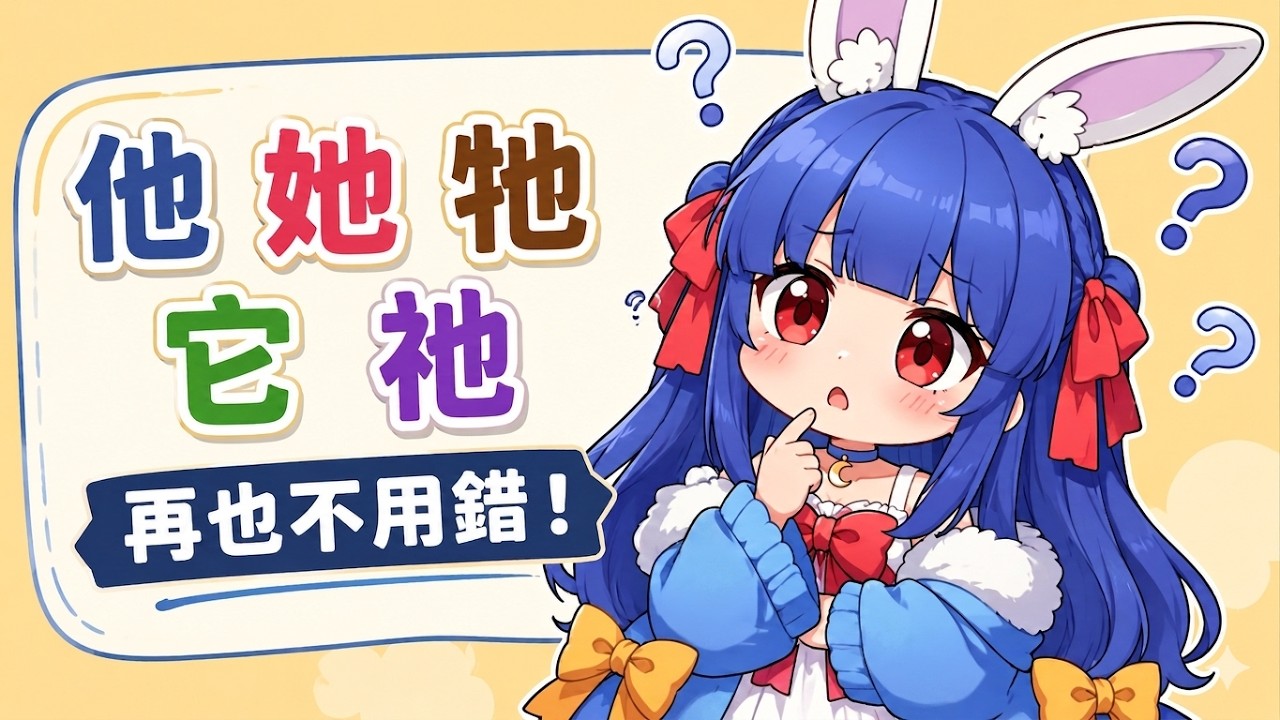
In Chinese, 他 is used for males, 她 for females, 它 for inanimate objects, 牠 for animals and non-human creatures, and 祂 for gods, spirits and supernatural beings. (All five are pronounced “tā” and differ only in how they are written.)Pronouns look like a small matter, but using the wrong one can leave readers unable to tell characters’ genders, or even make them think an object is haunted. This article collects the examples from the video, plus experience from 《嘿!聽說妳在鬼島當作家》 about prose and revision.
Why do readers get confused when pronouns are wrong?
In my manuscript review service I once received a manuscript about an office worker transported to another world, meeting many beautiful girls and beastfolk. It was quite fun, but every pronoun used 他. Reading it, I couldn’t quickly tell the characters’ genders, nor whether an arriving character was an animal, a beastfolk or a human.
It isn’t a huge problem, but once it becomes a habit, it’s troublesome both when revising and when explaining things to readers.
The correct use of the 5 pronouns
1. 他 (male) and 她 (female)
If the whole piece uses 他, readers may wonder whether the princess is a boy in disguise. Keep 他 for males and 她 for females clearly separate, and no matter how gender-neutral the princess’s name or how rough her behavior, readers can tell at a glance that she is a girl.
2. 它 (inanimate objects)
Little Long-Long Rabbit has a cute squirrel-shaped backpack. If you write “carried my beloved 他 to school” or “took something out of 他,” readers will feel the backpack might start moving at any moment and begin gnawing sunflower seeds. Unless your setting has magic, inanimate objects like tables, chairs, backpacks and blackboards use 它.
3. 牠 (animals and non-human creatures)
Giraffes, cats, rabbits and other animals and creatures besides humans use 牠.
4. 祂 (gods and supernatural beings)
Supernatural beings such as gods, ghosts, spirits and ghost officials use 祂. If you write a radish ghost as 他, 她 or 它, readers will feel the ghost is still alive and kicking, and it loses its mystery.
📖 Further reading:《嘿!聽說妳在鬼島當作家》 #102: Revising Is Really Such a Hassle
Small errors like pronouns are best caught together during revision. My habit is “after finishing a work, set it aside for a while, and revise from an objective angle once memory fades,” doing at least a second proofreading pass.
Want to improve your craft faster? Get feedback on your own work
Reading guides only goes so far. A one-hour novel consultation (NT$3,000; US$100 via PayPal for overseas clients) lets you bring your own manuscript and questions, and the manuscript review gives a full written assessment. Sessions are held in Chinese (Mandarin).
Pronoun summary
The person radical in 他 refers generally to males; the woman radical in 她 is female; the roof radical in 它 is an inanimate object; the ox radical in 牠 is for animals or other non-human creatures; and the altar radical in 祂 indicates gods or supernatural beings. Use the right pronouns and the story becomes more vivid and smoother for readers.
📖 Further reading:《嘿!聽說妳在鬼島當作家》 #101: Must a Novelist Have Great Chinese Grades?
My Chinese grades were only above average, but “as long as you write often and read more, you will surely improve.” The basics of prose and word choice are built up bit by bit.
FAQ
How do I tell 他, 她, 它, 牠 and 祂 apart?
他 is for males, 她 for females, 它 for inanimate objects, 牠 for animals and non-human creatures, and 祂 for gods, spirits and supernatural beings.
Can I use 他 for everything in a novel?
Not recommended. Readers can’t tell characters’ genders, or whether something is a person, animal or object, and are easily pulled out of the story; it also makes revising troublesome later.
Can I use 他 for objects?
Generally no. Using 他 for an inanimate object makes readers feel it is alive and can move, unless in your setting the object truly has life or a soul.
Which pronoun for animals and beastfolk?
Ordinary animals use 牠. For characters like beastfolk, who have human intelligence and social status, you may use 他 or 她 according to the setting; the key is consistency across the whole work so readers can tell them apart.
Which pronoun for gods and ghosts?
Use 祂, with the altar radical, which conveys the supernatural status and mystery.
Ready to bring your work to the publishing market?
Manuscript review, novel consultation, paid public critique and promotion: Utsudo replies within 3 days of your email. All services are conducted in Chinese (Mandarin).
About Utsudo
Utsudo (鬱兔) is a full-time novelist and a novelist VTuber with 40 print books published. Utsudo has worked with publishers and platforms including 三日月, 長鴻, 尖端 (Original Planet / 原創星球), 典藏閣, POPO Original, Penana and KadoKado, and twice received Taiwan’s Ministry of Culture youth creation grants. Want a professional author to read your manuscript? Take a look at Novel Services. Sessions are held in Chinese.
📚 Want more real-life stories from the writing road?The full Hey! I Heard You’re a Writer on Ghost Island series|Ebooks & Works
Leave a Reply