
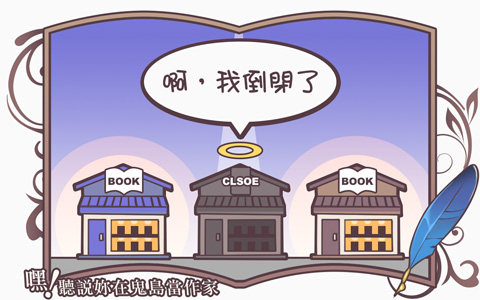
Is Taiwan’s publishing industry really in decline?At the end of 2018, Utsudo saw a publisher she’d worked with shut down and felt publishing’s winter deepening: bestseller lists have long been dominated by veteran authors, newcomers struggle to break through, and although e-books, audiobooks and IP adaptations are possible paths, only a handful of works are actually adapted. She believes that if you’re determined to keep writing, you’ll eventually find a way.
Translated from Utsudo’s original Chinese column.
A publisher I worked with closes: a publishing industry warning
At the end of 2018, one of the publishers I’d worked with announced it was closing its doors.
Hearing the news, I had so many mixed feelings.
It was one of my favorite publishers, and I’d wanted to keep working on new books with them if I had the chance — but now there won’t be one… I heard it was because the editors were in poor health and the editor-in-chief couldn’t carry it alone. Once again I felt the winter in publishing getting colder.

The decline of publishing didn’t start a year or two ago. Bestseller lists have long been occupied by authors from the industry’s heyday, leaving newcomers barely any room to breathe. Even if you’re lucky enough to be picked, you’re usually just there to fill out the lineup (though I don’t deny that some publishers still carefully plan and nurture new authors).
Are e-books and audiobooks the way forward?
Is digital publishing the way forward? Honestly, most of my friends and I still prefer the feeling of holding a book in our hands — reading on a screen is too hard on the eyes. But maybe the younger generation will feel differently.
The kids I meet have lives closely tied to their devices; in their free time they stare at their phones watching videos or playing games. You rarely see a child holding a book anymore.
Mainland China has also started publishing audio novels, so novels don’t need to be “read” — certainly a blessing for the eyes. But unlike writing a novel, it isn’t a one-person job; it takes more time and money to produce, and the barrier to entry is much higher.
The reality of IP adaptations
The IP industry has boomed in recent years, but only a tiny minority of works ever get adapted. The vast majority, even if signed, are just one among many — quite possibly just sitting there for show.
I’ve had inquiries about film and TV rights. But when I explained that all rights to the published book were held by the publisher, they said they only wanted rights held by the author. Was it that they didn’t want the publisher taking a cut, or wanted to avoid negotiating with the publisher? Or something else? (I hear that for adaptations, third parties usually negotiate directly with the publisher and then politely notify the author.)
I don’t know the answer, but even if you sign, don’t get your hopes up too high — the works actually adapted for film and TV can be counted on one hand.
Still, I believe some famous authors are treated better, and it has given some people a real chance to break through.
How creators can find a way to survive
Recently, creators in mainland China have also faced a crackdown. Novels of certain genres, or works with certain content, have been forcibly taken down; some creators have even been sued over it, and posting volume on some popular sites has dropped to a tenth.
People have come up with all kinds of workarounds. Reportedly, some creators have turned to selling one thing under the label of another — for example, a shop listing that says fresh groceries is actually selling doujinshi… If you’re caught, you could be in serious trouble, but nothing can stop love for one’s work, right?
I don’t know whether more storms lie ahead, but if you’re determined to keep creating, surely you’ll eventually find a way to survive?
Otherwise, I’ll just have to go set up a street stall!
---------
Happy Mid-Autumn Festival, everyone~~
FAQ
They may be one way forward, but many readers still prefer print. Audiobooks are easier on the eyes, but they take more time and money to produce, and the barrier to entry is higher.
The chance is slim. Even when signed, the vast majority of works are just one among many; those actually adapted for film or TV can be counted on one hand.
Further reading (in Chinese)
- Previous: #06
- Next: #08
- Start from the beginning: #01 — Utsudo’s debut
- Column introduction
- Utsudo’s books
About the author
Utsudo is a Taiwanese light novelist and novelist VTuber with more than ten years in the industry and 40 commercially published print books. Her novel 《遺失的情書》 received a 2022 Ministry of Culture youth creative award. The Hey! I Heard You’re a Writer on Ghost Island series records her experiences as a novelist in Taiwan.
📚 More on this topic: The Publishing Industry Today & Trends: Ghost Island Column Guide
✍️ Want a professional novelist to look at your story?
Utsudo offers manuscript reviews, 1:1 writing consultations and a novel-writing course to help you find your blind spots and get your work noticed.
Leave a Reply