
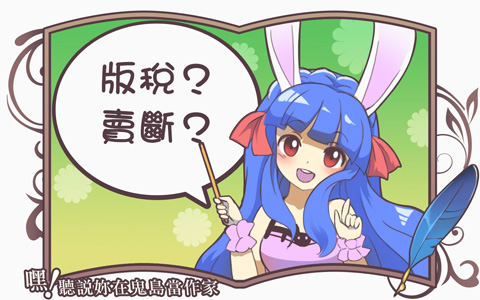
What should you watch out for when signing a light novel publishing contract?Utsudo suggests first checking whether the rights are licensed for royalties or sold outright. Royalties are usually around 5–7%, and guaranteed royalties are typically calculated as first-print copies × list price × royalty rate. Also watch the scope of rights (Traditional Chinese, all Chinese or worldwide), auto-renewal, delivery dates, and clauses that cancel the contract if the book isn’t published within the term.
Translated from Utsudo’s original Chinese column.
I’d like to share the points I pay attention to when signing a contract. This applies to light novels — it’s a bit different from the literary world.
Publishing contract basics: royalties or outright sale?
First, pay attention to how the rights are handled — is itroyaltiesoran outright sale?

With royalties, besides how many years the rights are transferred for, check the base royalty. (There’s usually a guaranteed royalty, typically calculated as first-print copies × list price × royalty rate.) The rate is generally 5–7%, depending on the quality of the work and the author’s reputation. I hear some big names get 10%, but with publishing in a slump, rates have actually been quietly dropping…
With an outright sale, is it a lifetime sale or for a fixed term?
Lifetime outright sales are fairly rare outside romance novels. But the contract system for web light novels in mainland China is basically outright sale, with other rewards and readers’ tips on top — if you’re popular, the returns can be quite generous!
Scope of rights: Traditional Chinese, all Chinese, or worldwide
Also, is the license for Traditional Chinese only? All Chinese-language editions? Or all languages worldwide?
This one is easier to understand. Simply put, it determines whether you get any coins if your work sells foreign rights. With a worldwide license, those profits have nothing to do with you — and many publishers now ask for worldwide rights by default.
But frankly, it’s pretty rare to sell foreign rights anyway XD
Auto-renewal and delivery dates
Oh, and some publishing contracts state that if you don’t request termination when the contract ends, it renews automatically. This is more common for e-books, so if you don’t intend to renew, be sure to note the end date and tell the publisher in advance!
Next, check whether a delivery date is specified and assess whether you can meet it. If you have doubts, raise it with your editor and have it changed.
Cancellation clauses and penalties if the book isn’t published
Also pay attention to clauses about automatic cancellation or compensation if the book isn’t published within the term (I got burned by this — stuck for four years without a cent QQ)
Those are the clauses I care about most for now; I may add more later.
You can also take a look at the penalties and which court handles disputes. But as long as your work is clean (no plagiarism, no double-signing, etc.), those are basically just there to scare you — no need to worry too much.
But I once saw a contract with penalties so heavy that the fine was more than two-thirds of the royalties from all thirty of my books. What on earth happened there (shivers
FAQ
Generally about 5–7%, adjusted for the quality of the work and the author’s reputation; well-known authors may get 10%. Guaranteed royalties are usually calculated as first-print copies × list price × royalty rate.
Check whether it covers Traditional Chinese only, all Chinese-language editions, or all languages worldwide. With a worldwide license, profits from foreign-rights sales may have nothing to do with the author.
Some contracts (more common for e-books) renew automatically unless you request termination. If you don’t want to renew, note the end date and let them know early.
Further reading (in Chinese)
- Previous: #11
- Next: #13
- Start from the beginning: #01 — Utsudo’s debut
- Column introduction
- Utsudo’s books
About the author
Utsudo is a Taiwanese light novelist and novelist VTuber with more than ten years in the industry and 40 commercially published print books. Her novel 《遺失的情書》 received a 2022 Ministry of Culture youth creative award. The Hey! I Heard You’re a Writer on Ghost Island series records her experiences as a novelist in Taiwan.
📚 More on this topic: Submissions, Publishing & Editors: Ghost Island Column Guide
✍️ Want a professional novelist to look at your story?
Utsudo offers manuscript reviews, 1:1 writing consultations and a novel-writing course to help you find your blind spots and get your work noticed.
Leave a Reply